


Roofing websites across Texas carry manufacturer badges, and the Owens Corning Preferred Contractor mark is one of the most common. The badge is not decoration. It signals that a roofing company has been reviewed against criteria set by a shingle manufacturer, and that review can affect what happens if your roof fails years after installation. It also says less than many homeowners assume, which is why it pays to know what sits behind the logo before you sign a contract.
Here is what the Preferred tier verifies, how it differs from Platinum Preferred, what the warranty language actually promises, and what the badge leaves out entirely. Use it as a checklist whether you are hiring in Dallas, Houston, San Antonio, or anywhere else in the state.
What the Owens Corning Preferred Contractor badge means
Owens Corning manufactures roofing products, including the Duration Series shingles that appear on many Texas homes. The company runs a network of independent roofing businesses that install its products and meet program standards. An Owens Corning Preferred Contractor is a roofing professional who has met specific criteria set by the manufacturer.
Those criteria matter because they come from the company whose name appears on the shingles. A contractor that clears the bar agrees to install to the manufacturer's specifications and to operate within the program's requirements. Program materials describe the outcome plainly: contractors who meet the strict requirements are presented as delivering exceptional results and reliable service on your roofing project.
In practical terms, the badge tells you three things at a glance. The company applied and was accepted into a manufacturer network, it installs Owens Corning products, and it has agreed to standards someone outside the company monitors. None of that replaces local due diligence, but it narrows the field.
Preferred versus Platinum Preferred: two different tiers
The program has levels, and contractors do not always make the distinction obvious in their marketing. Preferred is the entry tier into the manufacturer network. Platinum Preferred sits at the top of the same network and unlocks benefits the lower tier cannot offer.
| Tier | What it signals | Warranty access described in program materials |
|---|---|---|
| Preferred Contractor | Accepted into the Owens Corning network after meeting the manufacturer's criteria | Program descriptions emphasize reliable service and installation to specification; the strongest warranty terms are tied to Platinum |
| Platinum Preferred Contractor | Top tier of the manufacturer's exclusive network | Can offer Owens Corning's strongest warranty, covering materials up to 50 years and workmanship up to 25 years |
Contractors promoting the Platinum tier sometimes describe it as a level only about 1 percent of roofers nationwide reach. Treat that figure as a marketing claim until you confirm it with Owens Corning directly, since program size is not published alongside the badge. The warranty gap is more concrete. The strongest coverage, including the long workmanship term, is described as available through Platinum contractors rather than across the network as a whole.
If a company advertises Owens Corning Preferred in large letters and mentions a lifetime warranty in smaller ones, ask which tier it holds and which specific warranty that tier allows it to register. The tier on the truck wrap and the warranty in your contract should match.
Why the warranty is the part that matters most
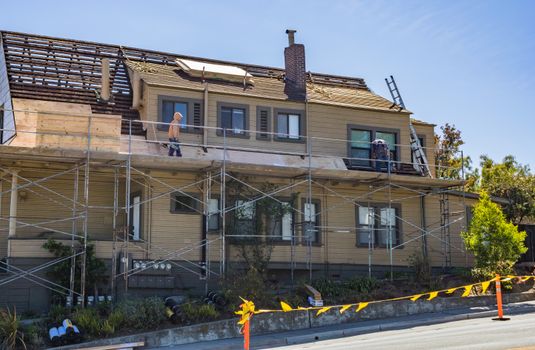
Roof warranties come in two pieces, and homeowners tend to blur them. The material warranty covers the shingles themselves. The workmanship warranty covers the installation: nailing pattern, deck preparation, flashing details, ventilation. A manufacturer can stand behind its product for decades, but a large share of real-world roof failures trace back to installation rather than the shingles.
That is where contractor tier becomes tangible. According to program descriptions, Platinum Preferred contractors can offer coverage of up to 50 years on materials and up to 25 years on workmanship. A contractor outside the network can still install the same shingles, but it cannot register that same combination of coverage on your home.
Read the paperwork before you assume you are getting the top coverage. Confirm the warranty name, the length of each component, whether coverage transfers if you sell the house, and what maintenance the manufacturer requires to keep it valid. Get those answers in writing from the contractor and cross-check them against Owens Corning's own warranty documentation. Verbal promises from a salesperson do not bind a manufacturer.
What the badge does not tell you
A manufacturer credential is a narrow signal. It speaks to a company's relationship with one supplier and its agreement to program standards. It does not certify everything a Texas homeowner needs to check.
- Insurance and registration status. Ask for a current certificate of insurance and confirm any contractor registration your city or county requires.
- Storm and hail experience. Texas roofs take punishing weather, and post-storm repair work is a different skill set from a planned replacement.
- Local code knowledge. Decking requirements, drip edge, and ventilation rules vary by jurisdiction.
- Crews and timelines. The badge says nothing about who performs the work or how long the job will take.
- Pricing and payment terms. None of that is governed by a manufacturer program.
- Dispute history. Complaints, lawsuits, and warranty callbacks live outside the badge.
Two companies can hold the same tier and deliver very different experiences. The credential filters out some risk. It does not replace references, a written scope, or a careful read of the contract.
How to verify the badge in a few minutes
Start with the manufacturer, not the contractor's website. Owens Corning publishes a contractor locator on its site, and that listing is the source of truth for who currently holds a tier. A badge graphic is easy to leave on a page after a status lapses.
- Open the Owens Corning contractor locator and search your city or ZIP code.
- Find the company you are considering and note the tier that appears in the listing.
- Ask the contractor for its program identification and compare it to what you found.
- Ask which Owens Corning products it is approved to install and which warranties it can register.
- Confirm any warranty claim in writing against Owens Corning's published terms.
If a company cannot tell you which tier it holds, or the listing does not match the badge on its site, that is a signal to slow down. Status in manufacturer programs can change, and the current listing is what counts.
Questions worth asking a Texas roofer
Bring a short list to the estimate. Contractors who genuinely hold a tier answer quickly. The ones who borrowed a logo tend to get vague.
- Which tier do you hold with Owens Corning, and how long have you held it?
- Which warranty can you register on my roof, and what are the material and workmanship terms?
- Does that warranty transfer if I sell the home?
- Who performs the installation, your employees or subcontractors?
- How do you handle a warranty claim two or three years from now?
- Can you provide references from roofs you installed at least five years ago?

Where the badge fits into a Texas roofing decision
Texas roofs face hail, high wind, and long stretches of heat, and a shingle system is only as good as the installation beneath it. A manufacturer credential is useful because it ties the installer to a set of standards and opens access to stronger warranty registration. It is one item on a short list, not the whole list.
Weigh it alongside local reputation, proof of insurance, a written scope that names materials and underlayment, a realistic schedule, and payment terms that do not require the full balance up front. Mr. Roof Fix handles roof repair, roof replacement, metal roofing, maintenance, and exterior remodeling for homeowners and property owners across Houston, Dallas, Fort Worth, Killeen, Austin, San Antonio, and surrounding Texas communities. Whoever you hire, ask for the credential in writing and confirm it at the source before the first shingle goes down.
Frequently Asked Questions
Is an Owens Corning Preferred Contractor better than a non-preferred roofer?
Not automatically, but the badge removes some guesswork. It confirms the company applied for and was accepted into a manufacturer network after meeting criteria set by Owens Corning. That speaks to product knowledge and installation standards. It does not confirm insurance, local references, crew quality, or pricing fairness, so keep checking those separately.
What is the difference between Preferred and Platinum Preferred?
Both are tiers in the same Owens Corning network. Preferred is the entry level for contractors who meet the manufacturer's criteria. Platinum Preferred sits at the top of the network and, according to program descriptions, can offer the strongest warranty, with materials covered up to 50 years and workmanship up to 25 years.
Does the badge guarantee a longer warranty on my roof?
Only at the Platinum tier as described in program materials. A Preferred Contractor still installs Owens Corning products, but the strongest coverage is presented as available through Platinum contractors. Always confirm the exact warranty name, the material and workmanship terms, and the transfer rules in writing before work begins.
How do I check whether a contractor still holds the badge?
Use the contractor locator on the Owens Corning website rather than trusting a badge image on a company page. Search by your city or ZIP code, look up the company, and note the tier shown. Then ask the contractor to confirm its program identification and the products it is approved to install.
Does the badge cover roof repairs or only full replacements?
Manufacturer programs center on installed roofing systems and the warranties registered on them, which is most relevant to full replacements. Repair work is typically a separate conversation about scope, materials, and workmanship guarantees. Ask the contractor directly what coverage, if any, applies to a repair rather than a complete roof installation.