


When a storm peels back shingles, cracks a ridge cap, or drops a limb through the deck, the roof stops doing its job. Water finds the opening fast, and the window between the storm and secondary interior damage is measured in hours, not days. Emergency roof tarping services exist to close that window. A tarp is not a repair. It is a temporary weather barrier that keeps rain out of your attic, insulation, and drywall while the permanent repair is measured, priced, approved, and scheduled.
What Emergency Roof Tarping Services Actually Do
A tarping crew installs a heavy-duty cover over the damaged section of roof and fastens it so wind cannot peel it away. The goal is narrow and practical: contain active weather exposure until a permanent repair scope can be assessed and scheduled. That is different from a repair, and it is different from a roof replacement.
In storm-prone markets, tarping providers typically operate around the clock. Crews deploy at any hour to cover exposed areas, and the work is often described as a bridge between the storm event and the permanent fix. What you get is protection, not restoration.
- Coverage of missing shingles, cracked ridge caps, and opened roof deck
- Protection over impact damage from limbs or debris
- A barrier over failed flashing or a persistent leak that will not stop
- Short-term containment so interior damage does not keep compounding
- Documented condition photos that support the repair and insurance conversation
Situations That Call for an Emergency Tarp
Tropical systems, severe thunderstorms, and hail events are the usual triggers. Wind strips shingles, hail cracks ridge caps, and suddenly the roof deck is open to rainfall. The same call applies after a fallen tree, a failed seal around a chimney, or a flat roof section that starts ponding and leaking into a ceiling below.
Tarping crews work across roof types. Providers in tile, shingle, flat, foam, and metal markets all advertise tarping, and some note that same-day installation is possible when the roof can be safely walked. If the roof cannot be walked, the crew has to work from ladders, from the ground, or wait for conditions to improve.
| What tarping is | What tarping is not |
|---|---|
| A temporary barrier that sheds water off the damaged area | A permanent repair or a replacement of damaged materials |
| A way to reduce continued water intrusion and interior damage | A guarantee that no water will get in during severe wind-driven rain |
| A documented record of the roof condition right after the storm | An insurance approval or a settlement decision |
| A holdover measure while the repair scope is assessed and scheduled | A fix for structural, electrical, or interior moisture problems |
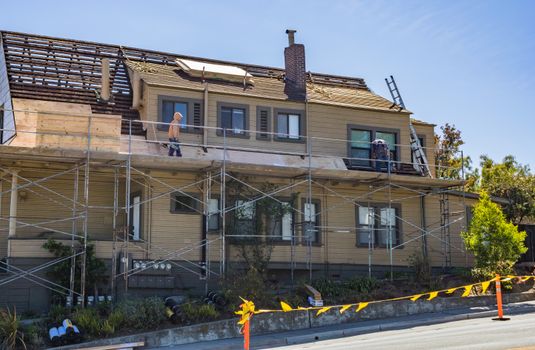
The Tarping Process, Step by Step
Step 1: The Emergency Call and Triage
You describe the situation and the dispatcher gathers the basics: address, roof type, where the leak is showing up inside, and whether anything is still actively falling or sagging. Photos taken from the ground help, but do not climb up to get them. Expect a conversation about whether the crew can safely access the roof and how soon someone can be dispatched. During a widespread storm, call volume can push arrival timelines out, even for crews that normally move fast.
Step 2: On-Site Assessment
The technician climbs onto the roof if it can be walked safely, measures the affected area, and identifies how far the damage extends. This is where the crew decides how much material is needed and where the tarp edges should land. The assessment also produces the photo record that matters later: what was damaged, how much, and where.
Step 3: Safety Setup and Material Staging
Ladders go up, materials come off the truck, and the crew establishes a work zone. Anyone on the roof is working on a wet, pitched surface, so staging and footing matter as much as the tarp itself. This step is also where a crew decides that a section is too steep or too unstable to cover from above and adjusts the approach.
Step 4: Tarp Installation and Fastening
Installation is where the quality shows. Crews lay heavy-duty polyethylene tarps over the damaged area, extend the edges well past the damage so water lands beyond the opening, and run the material so it sheds downhill. Tarps are secured with lumber battens in many installations, holding the material tight so wind cannot get underneath and turn it into a sail. Fasteners are placed where they will not create new entry points.
Step 5: Final Check and Handoff
The crew checks that the tarp is tight, that edges are weighted or fastened, and that water will run off rather than pool. Most will photograph the finished tarp for the file. You should leave with a clear picture of what was covered, what was not, and what needs to happen next to move into permanent repair.
Materials and Methods Crews Use
Heavy-duty polyethylene tarps are the standard material, chosen because they handle UV exposure and hold up to wind better than thin plastic sheeting. Lumber battens are common fastening aids, particularly on larger spans where a tarp needs structure to stay put. Shrink wrap is another option some providers offer, and it is often used where a large opening needs a more rigid, sealed cover. Ask which method the crew plans to use and why, especially on flat or low-slope sections where water can pond instead of running off.
What a Tarp Cannot Fix
A tarp redirects water. It does not restore structural strength, dry out soaked insulation, or stop mold that has already started in a wall cavity. Wind can work fasteners loose over time, and water can migrate sideways under a tarp edge during driving rain. Interior moisture is a separate problem with a separate fix, and it should be addressed alongside the roof repair rather than after it. If water is anywhere near electrical fixtures or wiring, keep people clear and bring in the right trade before the roofing crew starts.
Documentation and the Insurance Conversation
Photograph the damage before the tarp goes on, photograph the tarp once it is installed, and keep every receipt and invoice. That paper trail is what supports a claim when an adjuster reviews the file. Some contractors offer free estimates, and it is reasonable to ask whether the tarping charge can be credited toward the permanent repair if you hire the same company for the work. Whether tarping is covered at all depends on your policy, your deductible, and how the damage is classified, so confirm that directly with your insurer rather than relying on a contractor's read of the policy.

What to Do Before the Crew Arrives
Move valuables and electronics away from the leak, set buckets under active drips, and clear the driveway so the truck can get close. Do not go on the roof. A wet, pitched surface is not a place to troubleshoot, and a fall will turn a roof problem into a much worse one. If a section is sagging or a limb is still hung up in the tree above the house, keep everyone out from under it and tell the dispatcher when you call.
When you choose a provider, ask about licensing and insurance, whether the crew handles permanent repairs or only tarping, and what the written scope includes. A clear scope and a photo record make the handoff to permanent repair far smoother, and they give you something concrete to bring to your insurer.
Frequently Asked Questions
How long does it take to install an emergency roof tarp?
Timing depends on the size of the damaged area, the roof pitch, the material being used, and the weather at the time of the visit. A single damaged section can often be covered during one visit, while large or complex roofs take longer. Ask the dispatcher for an honest estimate rather than a best-case number.
Will a tarp keep all water out of my house?
No. A well-installed tarp significantly reduces water intrusion, but wind-driven rain can still work under an edge, and water can travel sideways beneath the material. Treat it as a strong temporary barrier rather than a seal. Check the interior after heavy rain and report any new wet spots to the contractor.
Does homeowners insurance cover emergency roof tarping?
Coverage varies by policy, deductible, and how the damage is classified, so the only reliable answer comes from your insurer. What you can control is documentation. Photograph the damage before and after installation, keep the invoice, and ask your adjuster directly whether the tarping cost is reimbursable.
Can I install a tarp on my own roof?
It is not a task worth taking on. Wet, pitched roofs are dangerous, and a poorly fastened tarp can come loose in wind and cause further damage or injury. Professional crews have the materials, fastening method, and safety setup to do the job correctly. Call a local emergency tarping provider instead.
How long can a tarp stay on the roof?
A tarp is a holdover measure, not a permanent roof covering, and how long it holds depends on material, installation quality, and weather exposure. Ask your contractor how long the installed tarp should reasonably stay in place and have them inspect it after any significant wind event. Schedule the permanent repair as soon as the scope is settled.